
| word "canola" is a combination
of two words: "Canada" and "oil", because it was developed
by Canadian agricultural research agencies. Many people have confused canola
oil with rapeseed oil, which is not an edible oil.
Canola
is considered to be one of the healthiest edible oils. It is high in unsaturated
and monosaturated fats, has NO trans-fats, and contains a high level
of the fatty acid called alpha-linolenic acid, which has been found to
reduce the risk of heart disease as reported by several well respected
journals, including the University of California Berkley Wellness Letter
(May 1999).
4. What does "pure expeller pressed" oil mean? "Pure" refers to the fact that there are no antioxidants (i.e. BHA or BHT) or additives (i.e. antifoaming agents) which are commonly added to many vegetable oils. "Expeller pressed" means that the canola oil is solely derived from a physical extraction process that uses pressure to squeeze out the oil. This is different than most commercial vegetable oils that use solvents to chemically extract the oil from the seed.
5. Do you use genetically modified oil and corn in your products? No. Both the organic corn and canola oil used in our tortilla chips and prepared foods are non-genetically modified (NON-GMO). We have obtained supplier certificates and lab tests verifying NON-GMO status. Unlike the organic industry where standards are defined and policed by various organic agencies, NON-GMO standards are still being developed. As a result, Que Pasa has developed its own NON-GMO verification program because we want to be proactive in meeting our customer's highest expectations for quality and safety. 6. Why does the Que Pasa fresh salsa only have 14 days shelf life? Our home-style salsa is made only with the freshest ingredients. Because we want to retain the flavours of fresh tomatoes, jalapenos, garlic, and cilantro, the salsa is not thermally processed and therefore has a limited shelf life of 14 days under refrigeration. Due to numerous requests from our customers for a salsa with a longer shelf life, we have recently developed a bottled salsa that has a one year shelf life. Our "Salsa Mexicana" has been formulated to incorporate all the flavors of a fresh home-style Mexican salsa and is a perfect compliment to our traditional tortilla chips. 7. Why is citric acid and calcium chloride used in the fresh salsa? Citric acid,
derived from citrus fruits, is used as an acidifier to control the acidity
of our salsa. Having the right acid level in our salsa assures a 14 day
shelf life. Calcium chloride is a form of salt that is used in small quantities
to maintain the firmness of the vegetables in the salsa. Calcium chloride
is a common mineral salt, very similar to the common table salt, or sodium
chloride. We practice very traditional cooking methods in preparing our tortilla chips. We therefore use hand-carved lava stones to grind our cooked corn into dough, called "masa". We use lava stones because they produce a higher quality, more traditional, masa when compared to synthetic stones. 9. Does Que Pasa provide tours of the facility? Yes. Tours are scheduled by appointment only from October 1 through April 30. Maximum group size is 10 people per tour. The tour is about 30 to 45 minutes and covers the tortilla plant, warehouse, and our deli store operations. Contact us at 604- 241 8175 or at info@quepasafoods.com, and we can arrange a visit. 10. Who would be the contact for sales information in the U.S.? Canada? Information
on sales contacts is provided in our Links Page
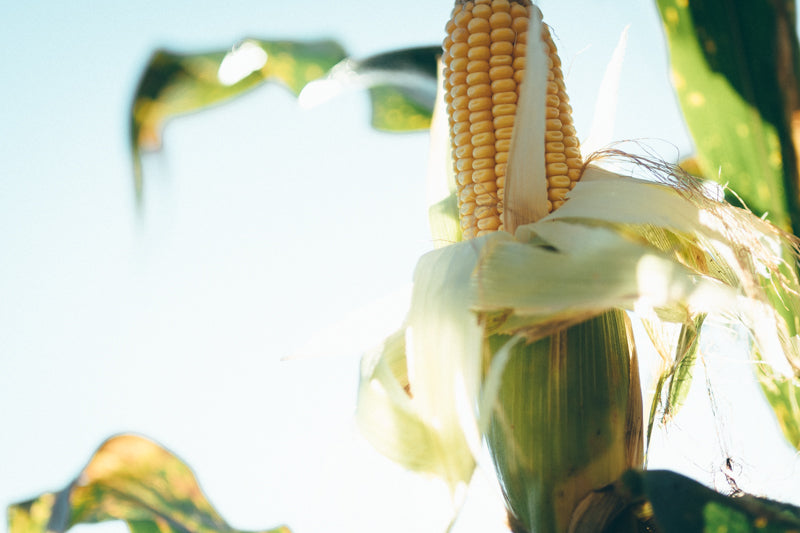
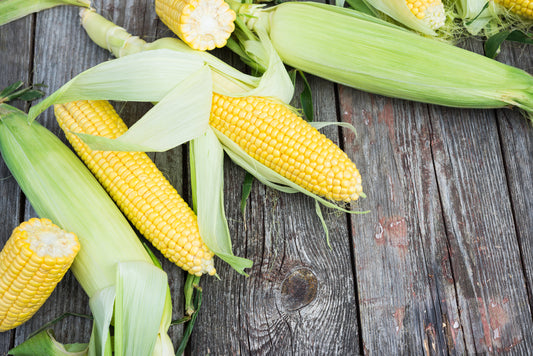
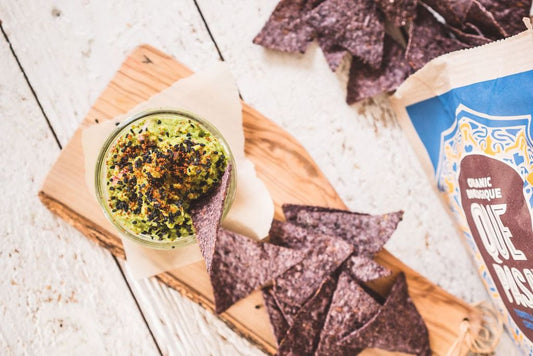
and Contact Us. Yes, you can purchase Que Pasa products on-line in the greater Vancouver area. Just go to our Links Page. Our retail store Store Page will also be happy to arrange for mail order sales to almost anywhere. Contact us at info@quepasafoods.com for more information. 12. What makes the blue tortilla chips blue? We use a special blue kernel corn that is grown especially for use in tortilla chips to make our blue corn tortilla chips. This corn is also organically grown and provides a slightly different taste and texture compared to our yellow and white corn tortilla chips.
Our red tortilla chips are actually made from organic red corn kernels. However, to get a nicer colour, we also use a blend of yellow and white corn that is coloured with a natural vegetable colour. This product provides a festive alternative to the other chip colours and is characterized by a slightly sweet flavour.
14. Do your chips and corn tortillas contain gluten, wheat, soy, or nut products?No, our chips and corn tortillas do not contain gluten, wheat, soy, or nuts as ingredients. Our corn tortilla chip facility does not manufacture products containing these allergens. For all of the products processed in our facility we have an allergen management program in place. This is inteded to ensure our chip and tortilla products are not exposed to any undeclared allergens. Please contact our Quality Assurance Department if you have specific allergen concerns about any of our products - Links.
Please note that while we only process whole grain corn in our plant, it may be possible for some of these other items to occur in a batch of corn or be present to some degree in other ingredients or foodstuffs stored in the plant. For example, packaged wheat flour tortillas are stored at our plant, even though we do not manufacture them at this facility. 15. Are your products Kosher?All our tortilla chips are certified by Kosher Supervision of America. The salted and unsalted tortilla chips are designated as kosher DE (dairy equipment) and the seasoned snack chips are kosher D (dairy).
Our prepared foods products and salsas are currently not certified kosher. 16. What is Calcium Hydroxide and why do you use it in making your tortilla chips?
Calcium hydroxide Ca(OH)2, is a colorless crystal or white powder. It is prepared by reacting calcium oxide (lime) with water, a process called slaking. It is also known as hydrated lime or slaked lime. Calcium hydroxide has many uses, e.g., in liming soil ( to control acidity [pH]), in sugar refining, and in preparing other compounds. It is a strong base and is widely used as an inexpensive alkali, often as a suspension in water (milk of lime) used in medicine to treat acid burns and as an antacid. Calcium hydroxide has been used for centuries by Latin American countries to process corn for traditional tortillas. It is used to break down the outer pericarp of the corn and soften it to help create a dough. In fact, in pre-histsoric times it is believed that ashes were used initially as a caustic to break down the corn kernels. Then, as now, the corn is washed to remove the bitter taste of the lime or caustic before processing. We list it in the ingredients, because there is always a trace of it in the finished product-usually below detection limits. 17. Do Que Pasa Tortilla Chips contain Trans-Fats?
No,
Que Pasa Tortilla Chips are made only with non-hydrogenated oils. Therefore,
there are virtually no Trans-Fats in our products. The new labeling on
our packaging will be introduced over the next year and will state “Zero”
Trans-Fats on the Nutritional portion of the label. 18. Does Que Pasa provide any donations?
We frequently receive requests from various community groups and institutions to provide donations or to sponsor groups or events. These donations are provided only in the Greater Vancouver, BC area. In order to assist you in making your requests, we've outlined below our general policy regarding these requests.
To submit a request for a donation you must:
All donations must be picked up at the date and time scheduled with you.
|
About Us What's New Contact Us Products Store Links FAQs Home
Copyright 2001. QuePasa Mexican Foods.